Castellano
# Champions without playing the final? TRH’s proposal to avoid W/O
TRH proposes replacing walkovers with eligible semifinal or quarterfinal opponents, allowing decisive matches and tournament finals to be played on court.
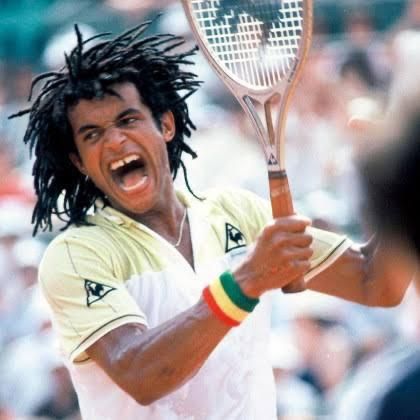
Jimmy Connors pulled out of three finals, while Ivan Lendl picked up two titles without playing the final. In both of Lendl’s cases, Yannick Noah would have been eligible to step in under the Tennis Race for History proposal.
A tournament can crown a champion without its title match ever taking place. If one finalist withdraws before play begins, the other takes the title by walkover (W/O). The rules provide for that outcome, but it leaves the tournament without a final and fans without the match they came to see.
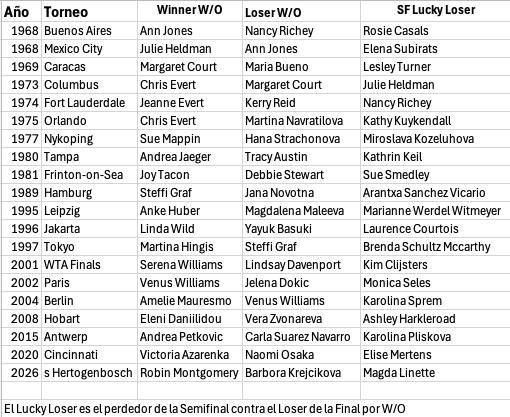
The Tennis Race for History database records 15 men’s finals decided by walkover between 1973 and 2026. A closer look reveals a few recurring names and points to an alternative. The player beaten by the withdrawing finalist in the semifinals could take the vacant spot (Semifinal Lucky Loser).
Jimmy Connors tops the list with three finals he never played. The titles went to Alex Metreveli at South Orange in 1974, Vitas Gerulaitis in New York in 1975 and John McEnroe in Chicago in 1985.
Under the TRH proposal, Kim Warwick, Jan Kodeš and Andrés Gómez would have been in line to take his place, respectively. Each had lost to Connors in the semifinals.
Manuel Orantes withdrew from two finals. Raúl Ramírez took the title in Kitzbühel in 1973, and Karl Meiler was crowned champion in Manila in 1977.
Ivan Lendl is the only player on the list to benefit twice. He took the titles in Philadelphia in 1986 and Miami in 1989after Tim Mayotte and Thomas Muster withdrew, respectively.
The two finalists had something in common. Both had beaten Yannick Noah in the semifinals. Under the proposed rule, the Frenchman could have returned to the draw and faced Lendl for the title on both occasions, provided he was available and fit to play.
The circumstances in Miami were particularly serious. After beating Noah, Muster was involved in a road accident that ruled him out of the final and left the tournament without its title match.
Who would get the vacant spot?
TRH proposes that if a player completes and wins a quarterfinal or semifinal but withdraws before the next round, the opponent they beat may take their place.
The rule would cover two situations.
-
Withdrawal before a semifinal. The player beaten by the withdrawing player in the quarterfinal could return to the draw.
-
Withdrawal before the final. The player beaten by the withdrawing finalist in the semifinal could return to the draw.
Eligibility would depend solely on the result of the previous round. Ranking, a random draw and tournament discretion would play no part. The replacement would already have reached the latter stages of the event and would have been knocked out by the player whose spot had opened up.
The loss would still count
The reinstated player would keep the loss on their record, and the withdrawing player would keep the win. Any matches played after the substitution would also count as official results, with a note in the record marking the reinstatement.
A player could therefore win the title after losing a match at the same tournament. The original result would stand, and the reinstated player would still have to win the final. If they came back at the semifinal stage, they would have two rounds left to win.
Conditions for the match to go ahead
The previous match must have been played to completion. A player whose run ended through withdrawal, retirement or default would be ineligible.
The eligible player would have to be available, formally accept within the set deadline and be medically fit if a fitness check were required. The match would also have to go ahead at the scheduled time or within a reasonable window that kept the tournament schedule largely intact.
To make this workable, players knocked out in the quarterfinals and semifinals would need to remain reachable until the tournament officially confirmed the lineup for the next round.
The reinstated player would have played the same match on the same day as the player they were replacing, so they would have the same recovery time.
If the eligible player were unavailable, declined the spot or was unfit to play, the walkover would stand.
Ranking points, prize money and recognition
The substitution would also affect how ranking points and prize money are awarded.
Under the TRH proposal, the withdrawing player would keep their previous win and receive runner-up points in the event of a withdrawal before the final. Prize money and recognition for an unplayed round would be withheld, subject to any specific compensation set out in the rules.
Whoever won the final would be the tournament champion, having earned the title on court. If the reinstated player won, they would receive the points for winning the final, with no credit for a semifinal win. At a Masters 1000, for example, they would earn 750 points.
A walkover as the last resort
The main objection is clear. A player could lose a match, return to the draw and win the tournament. TRH believes the exception can be justified when the player who beat them withdraws and leaves a spot open at the business end of the event.
The remaining finalist has earned the right to play for the title. The rule would give them that match against a replacement whose eligibility was determined on court in the previous round.
The rule would initially apply only to withdrawals after completed quarterfinals and semifinals.
TRH’s proposal would make a walkover the last resort. If the eligible opponent is available and fit to play, the semifinal or final should be decided on court.
Source for the historical cases — Tennis Race for History database